

Back to all stories
SOARING SISTER STORIES
The Silent Treatment vs. Healthy Space: How to Know the Difference
Ama K. Karikari, Esq.
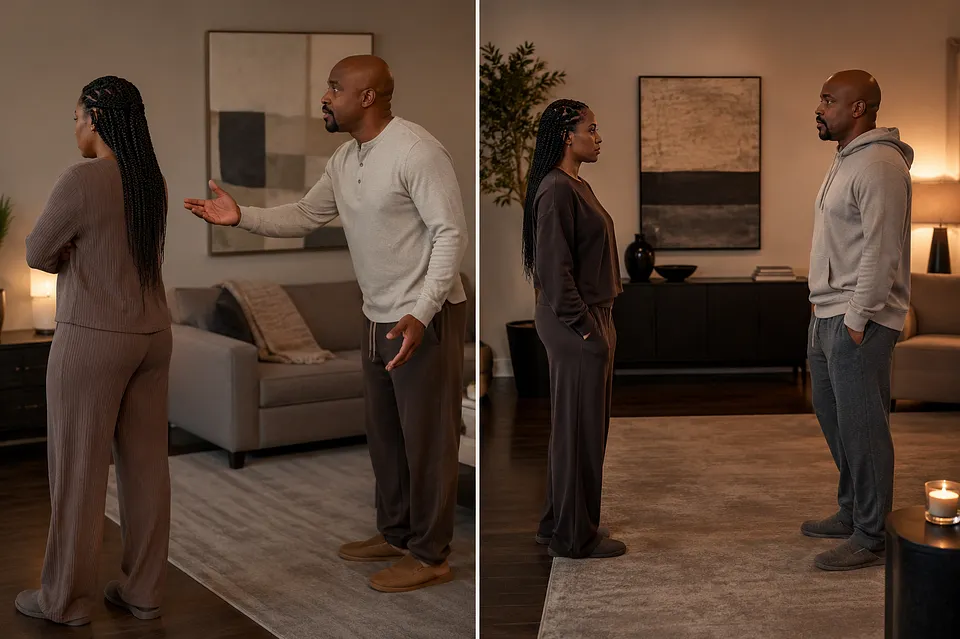
"I need time to process this."
This simple sentence helps separate healthy space from emotional abuse.
Processing speed is a real, documented phenomenon in relationships. Some people think and feel quickly; others need time to organize their emotions, regulate their nervous system, or gather their thoughts. The Gottman Institute has long affirmed that taking breaks during conflict is not only healthy but essential for preventing emotional flooding. In a functional relationship, someone might ask for thirty minutes or even a full day to think, and then intentionally return to the conversation with respect, clarity, and genuine care.
What is not healthy is the silent treatment: the sudden withdrawal of communication paired with hostile or aggressive energy without explanation, without agreement, without any plan to return, and without any repair afterward. Perpetrators of the silent treatment expect everything to go back to normal on their schedule and act like nothing ever happened.
That is not emotional regulation. That is emotional abandonment and abuse.
Psychologists define the silent treatment as the intentional refusal to communicate, interact, or acknowledge another person as a form of punishment or control. Dr. Steven Stosny has shown that emotional withdrawal activates the same neural pathways as physical pain. Trauma expert Dr. Bessel van der Kolk explains in The Body Keeps the Score that chronic emotional abandonment destabilizes the nervous system, contributing to inflammation, anxiety, and depression. This is not metaphor. This is physiology.
We live in a world overflowing with resources for emotional growth. So it is no longer acceptable to excuse emotional neglect as "just how I cope." Healthy distance is fine. Nervous system regulation is fine. But disappearing without explanation, punishing your partner with silence, and returning days later as if nothing happened is not coping. It is abuse.
The clearest way to see the difference:
Healthy cool-off: A request is made and a time is agreed upon. "I need 30 minutes." "Can we come back to this tomorrow?" When the time is up, both partners return. There is accountability, repair, and mutual respect.
Involuntary stonewalling: Overwhelm leads to a shutdown, without asking for space. The nervous system has hit a wall. But the person eventually returns calm, emotionally available, and ready to repair. This is solvable when both partners commit to growth.
Abusive silent treatment: No permission. No explanation. A cold flip of the switch. The partner withdraws for more than 24 hours, often for days or weeks, carrying angry or punishing energy. They may speak normally to everyone else while refusing to acknowledge you. When they return, there is no apology, no explanation, and often a quiet demand that you act normal. As domestic violence expert Lundy Bancroft notes, the purpose of the silent treatment is control, domination, and manipulation. Not nervous system overwhelm.
If you are asking yourself, "Am I overreacting?" you are not.
Healthy space is temporary, collaborative, and offered with care. Involuntary stonewalling is a stress response that improves with self-awareness and repair. But the silent treatment is abuse, and your nervous system knows the difference long before your mind finds the words for it.
You are not too sensitive. You are not asking for too much. You are simply paying attention to what your body has been trying to tell you all along.
If any of this feels familiar and you need support, the National Domestic Violence Hotline is available 24/7 at 1-800-799-7233 (SAFE), by text at START to 88788, or by chat at thehotline.org.
Ama K. Karikari, Esq. is author of an empowerment workbook for mothers entitled Silenced to Soaring: Heal from Chronic Silent Treatments, Toxic Relationships, and Abuse. Women can read the book for free through our free community for women who mother. She also runs Sister Soaring Circles, online peer group coaching support and mastermind programs for women overcoming abuse to live their most empowered lives.
Soaring Sister Circles offer peer support, accountability, and a place to build what comes next.
Explore the circles